
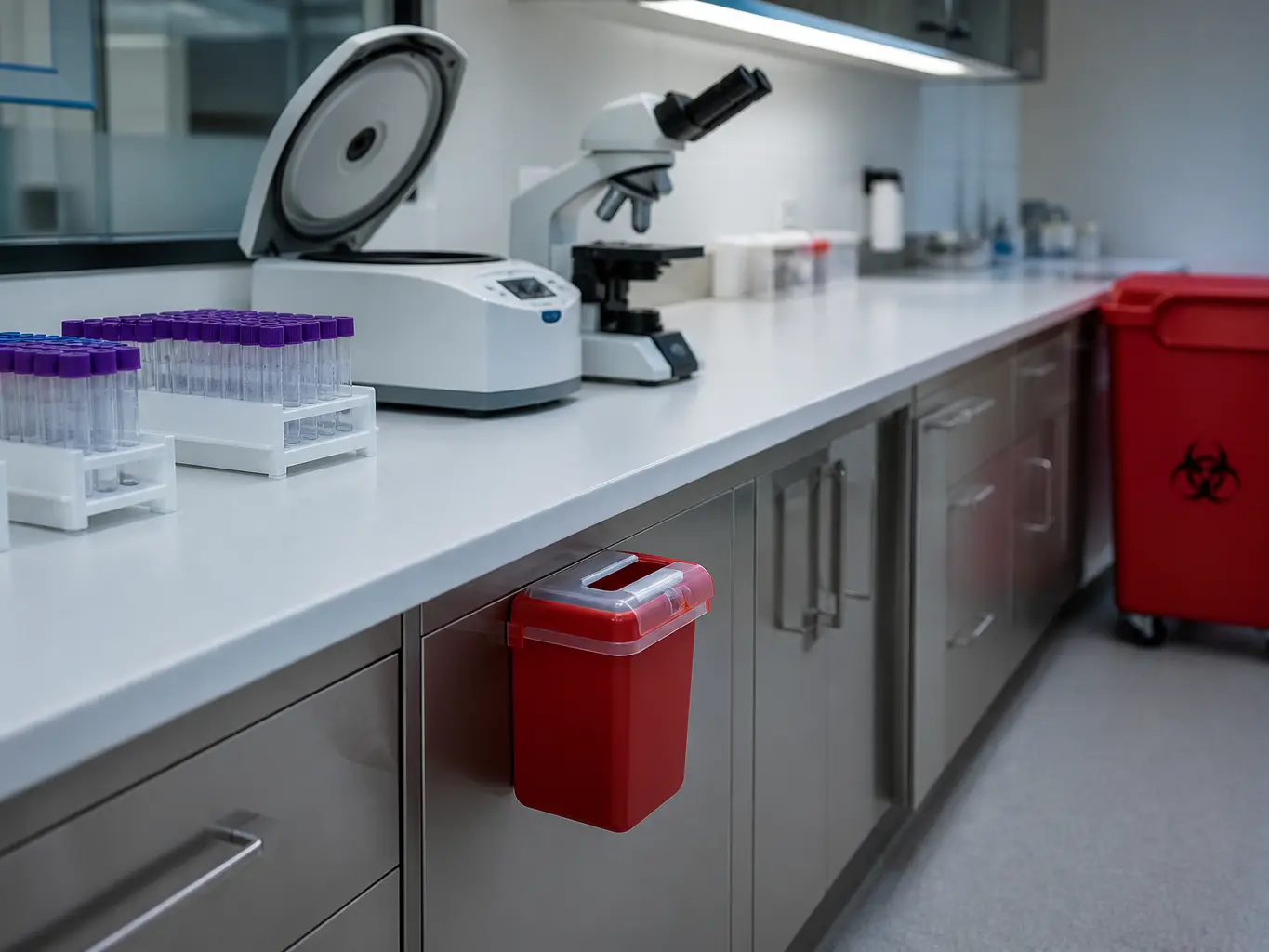
Laboratories
Laboratory medical waste. Confirmed stream by stream.
Cultures, specimens and a stream that has to be segregated correctly long before it reaches a container.
Straight answers
Send the stream list first. It saves a second quote.
We confirm in writing what Shred Med collects, and name what has to go to a specialist.
A bench inside a clinic is still a lab.
What decides the service is your stream list, not your square footage.
- Clinical and diagnostic laboratories
- Pathology labs
- Practice-based labs inside a clinic
- Research labs generating biological waste
Handling & compliance details
An autoclave cycle changes the category, not just the container.
Three terms decide where a lab stream goes, and who stays responsible for it after it leaves.
Cultures and stocks
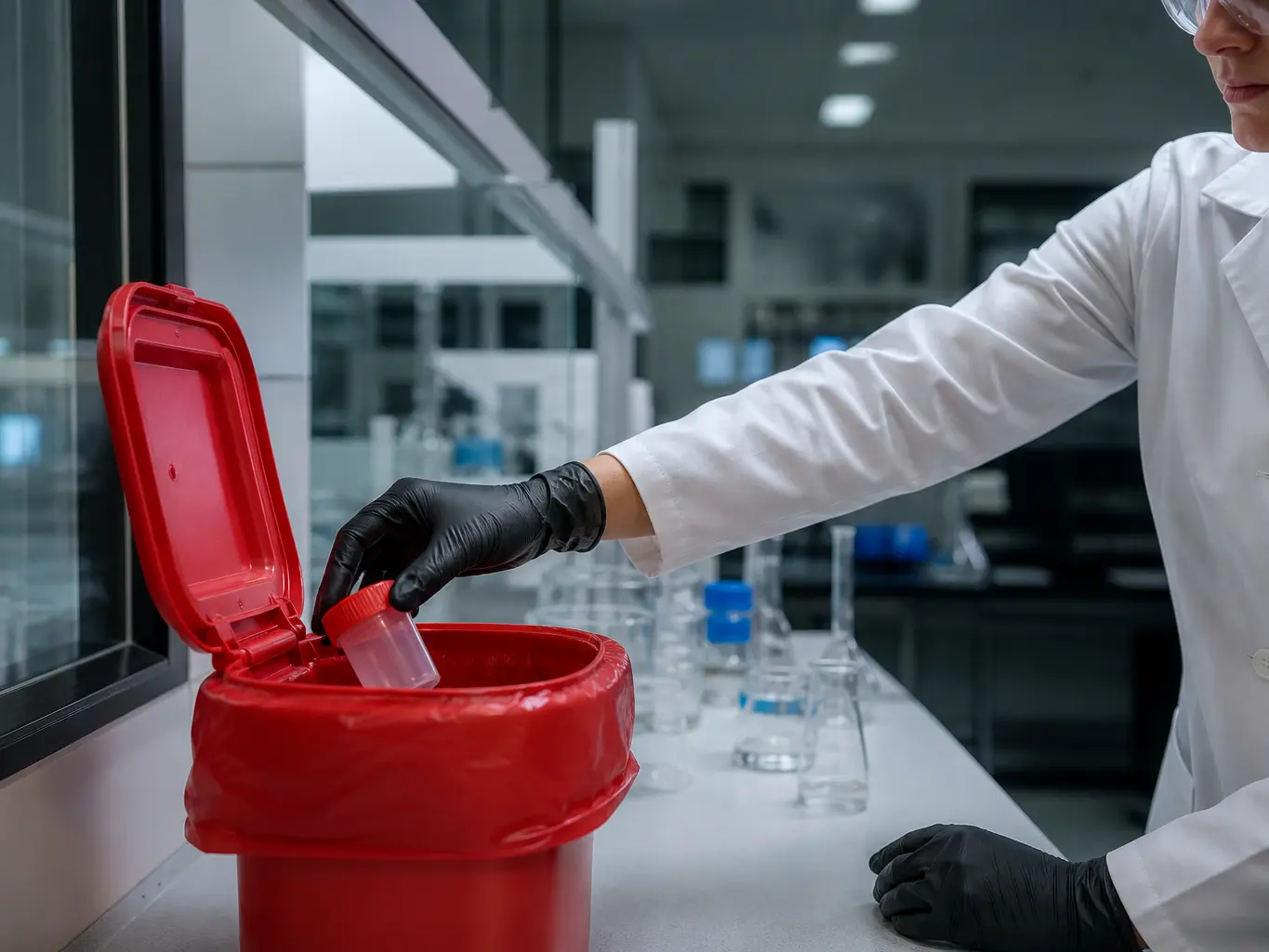
- Cultures and stocks are laboratory preparations of infectious agents, together with the plates, tubes and devices used to grow, transfer and mix them.
- Also called: Microbiological waste, Culture waste
- Counts as Cultures and stocks
- Culture plates and the devices used to transfer them
- Specimen containers holding blood or other potentially infectious material
- Not Cultures and stocks
- Unopened, uninoculated media still in its packaging
- Chemical and solvent waste from the bench, which is a different rule and usually a different collector
Treated waste
- Treated waste is medical waste that has been autoclaved or otherwise treated, and treated waste is generally no longer regulated medical waste, which is why treatment changes what the waste legally is rather than only where it goes.
- Also called: Autoclaved waste, Decontaminated waste
- Not Treated waste
- Untreated waste staged next to the autoclave, which stays regulated until the cycle has actually run on it
Generator
- The generator is the facility that produced the waste, and generator status stays with that facility rather than transferring to the hauler that collects it or the facility that treats it.
- Also called: Waste generator
- Counts as Generator
- Your laboratory, for every stream produced at your bench
- Not Generator
- The hauler that collects the container
- The facility that treats what is inside it
Four authorities meet on one bench.
Only one of them is a medical waste rule.
| Stream | What governs it | What has to be settled first | Source |
|---|---|---|---|
| Contaminated sharps and broken glassware | OSHA, 29 CFR 1910.1030 | Container placement, which the standard puts as close as feasible to the immediate area where sharps are used | 29 CFR 1910.1030 |
| Cultures, stocks and specimen waste | State medical waste rule | Which state category the stream falls into, and whether Shred Med collects it, confirmed in writing | Utah DEQ, Division of Waste Management and Radiation Control |
| Regulated medical waste in transport | DOT, 49 CFR | Nothing on your side. The load is described as Regulated medical waste, n.o.s., UN3291, Hazard Class 6.2, once it leaves. | 49 CFR |
| Chemical and solvent waste | RCRA hazardous waste | Whether the material is P-listed, U-listed, or exhibits ignitability, corrosivity, reactivity or toxicity. That is a different rule and usually a different collector. | RCRA |
| Ordinary laboratory trash | Not regulated | Nothing, provided it stays out of the regulated container |
Shred Med confirms in writing which of these streams it collects, and names the ones it does not, before service starts.
No container has ever made a routing decision.
None of these are container problems. All four are decisions made metres away from the container.
Making the routing decision at the container instead of at the bench.
CostOnce a chemical stream is inside a regulated medical waste container, the load has been mixed into a stream governed by a different rule, and nobody downstream can unmix it. Regulated medical waste also costs more per pound to transport and treat than ordinary solid waste.
Do this insteadDecide the stream where the waste is generated, and label the bench container for what it holds rather than for the room it sits in.
Assuming responsibility moves to the hauler once the container is on the truck.
StateThe generator of the waste remains the generator, and that status does not transfer to a hauler.
Do this insteadKeep your own copy of every tracking document that travels with a shipment and every certificate issued after treatment. Those are two different documents.
Treating a stream as settled because a previous provider took it.
Which streams a provider collects is set by that provider's own authorisation, not by what the container looks like, so a stream one provider accepted is not automatically a stream the next one accepts.
Do this insteadGet written confirmation of every stream, including the ones your last provider collected without ever discussing them.
Staging treated and untreated waste in the same place.
SafetyAutoclaved, treated waste is generally no longer regulated medical waste, but untreated waste sitting beside it still is, and a shared staging area makes the two indistinguishable to anybody who did not run the cycle.
Do this insteadKeep treated and untreated staging physically separate and labelled, so the difference survives a shift change.
Segregation happens at the bench, not at the dock.
The container in the corridor cannot fix a decision made at the bench. Your team already knows its streams better than any hauler does. What Shred Med brings is the right container in the right place for the streams it is authorised to collect, and a straight answer on the ones it is not.
- Label the bench container for the stream it holds, not for the room it sits in
- Keep chemical and solvent waste out of the regulated medical waste container
- Confirm every stream in writing before the first collection
RCRA governs hazardous waste, including material that is P-listed, U-listed, or exhibits ignitability, corrosivity, reactivity or toxicity.
Straight answers
Send us your stream list first
A lab quote that skips the stream list is a quote that will change later.
Send us what you generate and we will confirm in writing what Shred Med collects and what has to go to a specialist. Collection itself is unremarkable by design: sealed containers are collected and replaced, and nothing is opened, decanted or re-sorted on your site. See Compliance for how responsibilities divide up.

Ready for a cleaner, easier solution?
Send us your stream list and we will confirm your containers and your pickup day.