
Why Shred Med
Run by local people. Here when you need us.
We are local, responsive and easy to reach. Medical waste service should not feel harder than the waste itself.

Local people
A partner who answers.
The person on the phone can see the same schedule as the technician in your parking lot.
Eight questions buyers ask us. Here are the answers.
Nobody changes waste provider over the waste. They change over these eight things, so this is where we start.
| The usual experience | Shred Med | |
|---|---|---|
| Who answers when you call? | A support path that may pass the question along. | A local person who can see the same schedule as the technician in your parking lot. |
| Can you predict what next month costs? | Confusing invoices, with fees and surcharges arriving on them. | You look at your quote and know what next month costs. |
| What is the price quoted against? | A package tier you pick from. | What your facility actually generates. |
| What happens when your volume drops? | It becomes a contract dispute. | It becomes a conversation. We would rather adjust your schedule than bill you for pickups you did not need. |
| What does a service change have to travel through? | Three systems and a regional manager. | One phone call to the person who can see the route. |
| Who actually runs the truck? | A national account team, with the route subcontracted onward. | A Utah operation running Utah routes. |
| Is a single-chair practice worth serving properly? | Volume decides the service level you get. | Small generators are most of who we built this for. |
| Who is the generator of the waste? | The facility that produces it. | The facility that produces it. |
One answer is the same with any provider: generator status stays with the facility that produced the waste. We build the documentation around that rather than around a promise nobody can keep.
Three things we will always hold to
Choosing a provider changes your invoice and your phone experience. These three stay put, and we build your program around them.
- The rule behind most day-to-day handling
- 29 CFR 1910.1030
- OSHA's Bloodborne Pathogens Standard drives how a small practice handles contaminated items
- 29 CFR 1910.1030
- How the load ships
- UN3291
- Regulated medical waste, n.o.s., Hazard Class 6.2, under the DOT hazardous materials rules
- 49 CFR
- When the federal tracking program expired
- 1991
- Medical waste has been regulated state by state since, which is why answers differ across state lines
- Medical Waste Tracking Act of 1988
Local
Local is not a marketing word here
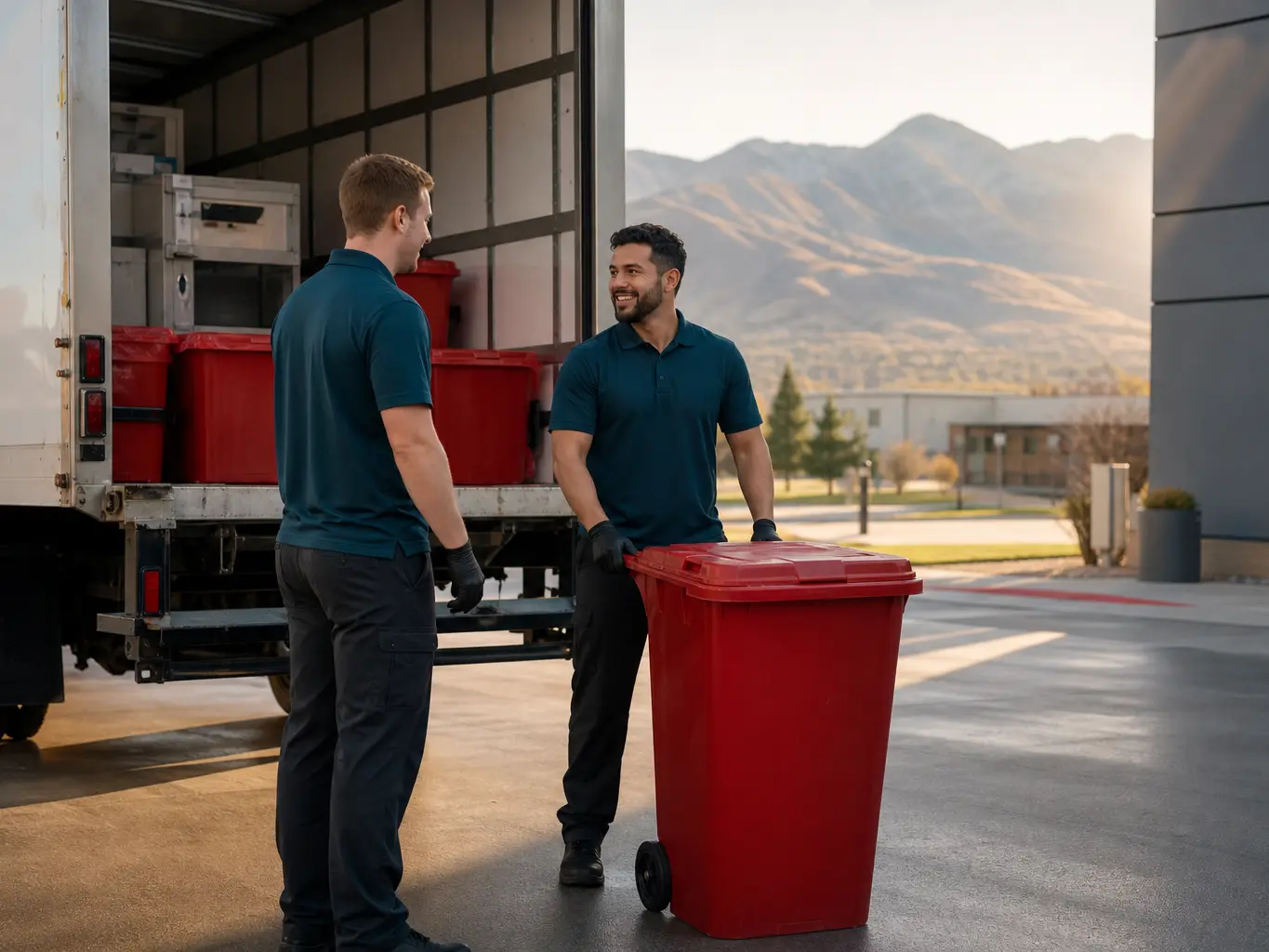
Shred Med is the medical-waste division of the Shred Utah / Shred Salt Lake family: a Utah operation running Utah routes.
That means the person who answers the phone can see the same schedule as the technician in your parking lot, and a change to your service does not have to travel through three systems and a regional manager to happen.

The expensive part is in the contract, not the quote
These are the four that cost small practices the most, and none of them appear on a quote. Ask us about any of them and you get the answer in writing.
Signing before you know what triggers a surcharge
CostFuel, environmental and administrative lines are added under terms you already agreed to, so there is nothing left to dispute when they appear on the invoice.
Do this insteadAsk for the full fee schedule and the price-change terms in writing, before you sign.
Assuming the hauler becomes the generator
StateThe facility that produces the waste remains the generator, and that status does not transfer to a hauler, so the records stay your problem.
Do this insteadKeep your own copy of every tracking document and every certificate, whoever hauls the waste.
Signing without checking who in your practice counts as a hazmat employee
DOTUnder 49 CFR 172.704 hazmat employees require training, including recurrent training at least once every three years, and whether your staff count depends on whether they prepare shipments or sign shipping papers.
Do this insteadWork out whether anyone at your practice prepares or signs shipping papers, then get the training answer in writing.
49 CFR 172.704Treating the pickup schedule as fixed for the term
CostA schedule you cannot change is a schedule you pay for whether the containers are full or empty, and container fullness is the one variable a practice can actually move.
Do this insteadAsk what it takes to change a pickup date, and who you call to do it.
Pricing
Look at your quote. That is what next month costs.
We quote against what your facility actually generates, not against a package tier.
If your volume drops, tell us. We would rather adjust your schedule than bill you for pickups you did not need, and that is a conversation rather than a contract dispute.
Ready for a cleaner, easier solution?
Let's make medical waste one less thing to worry about.