
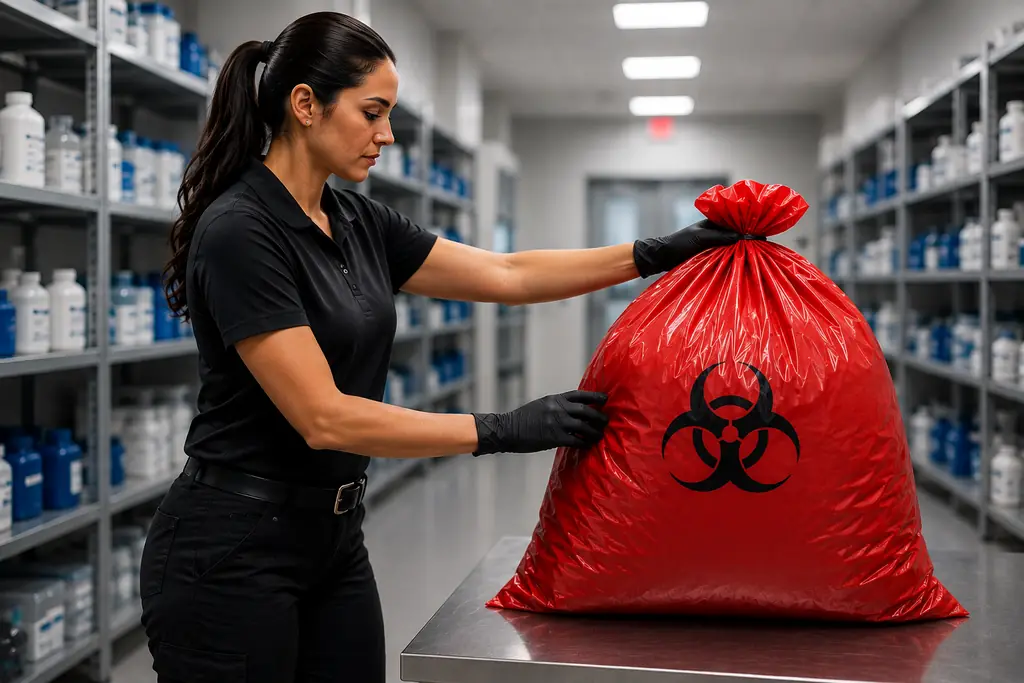
Regulated medical waste
Regulated Medical Waste Disposal in Utah
A simple, dependable program for healthcare facilities that generate red-bag medical waste.
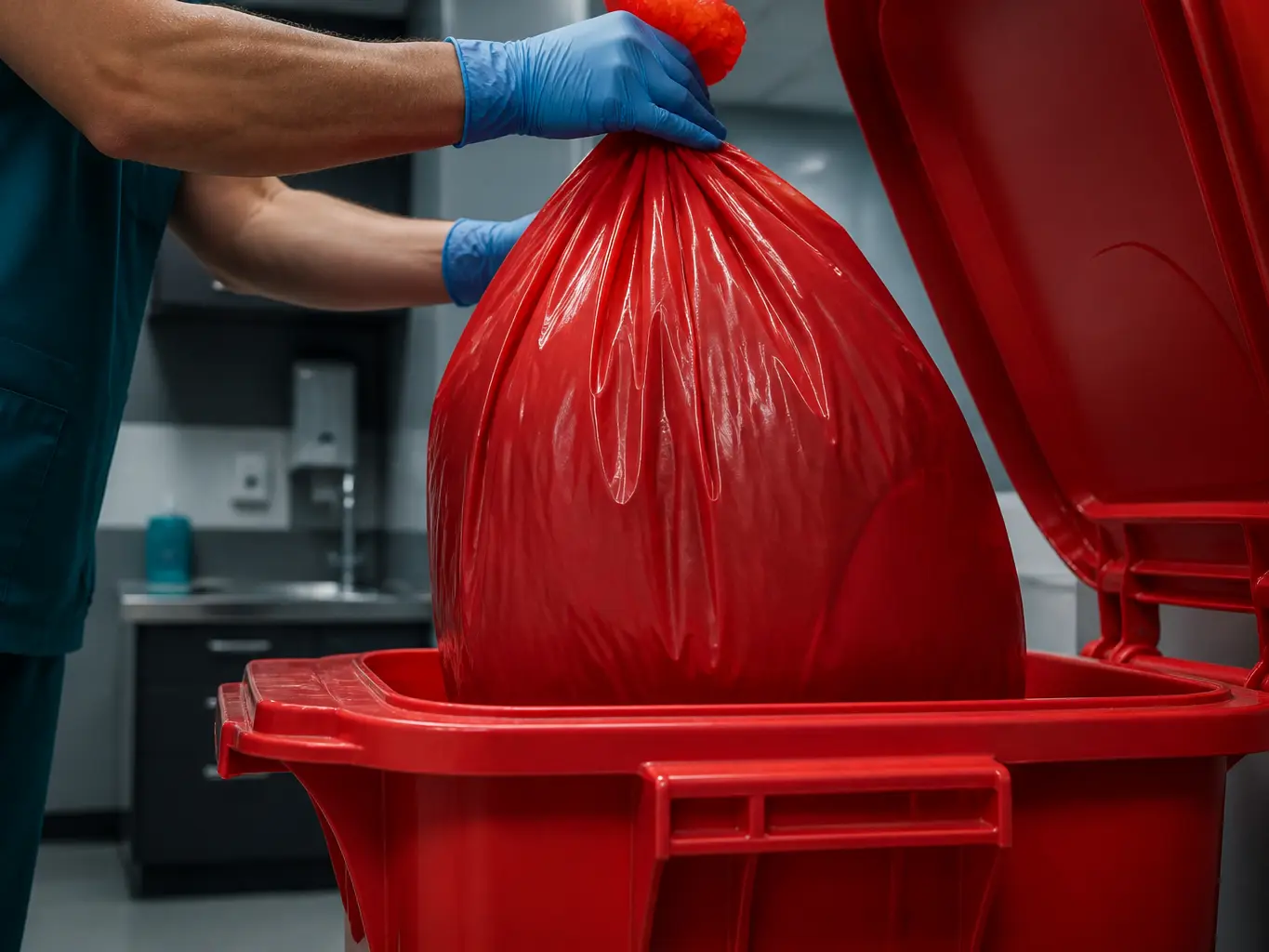
On pickup day
Sealed goes out. Clean goes in.
Your team never touches the waste again once it is in the container. Nothing is opened or re-sorted on your site.
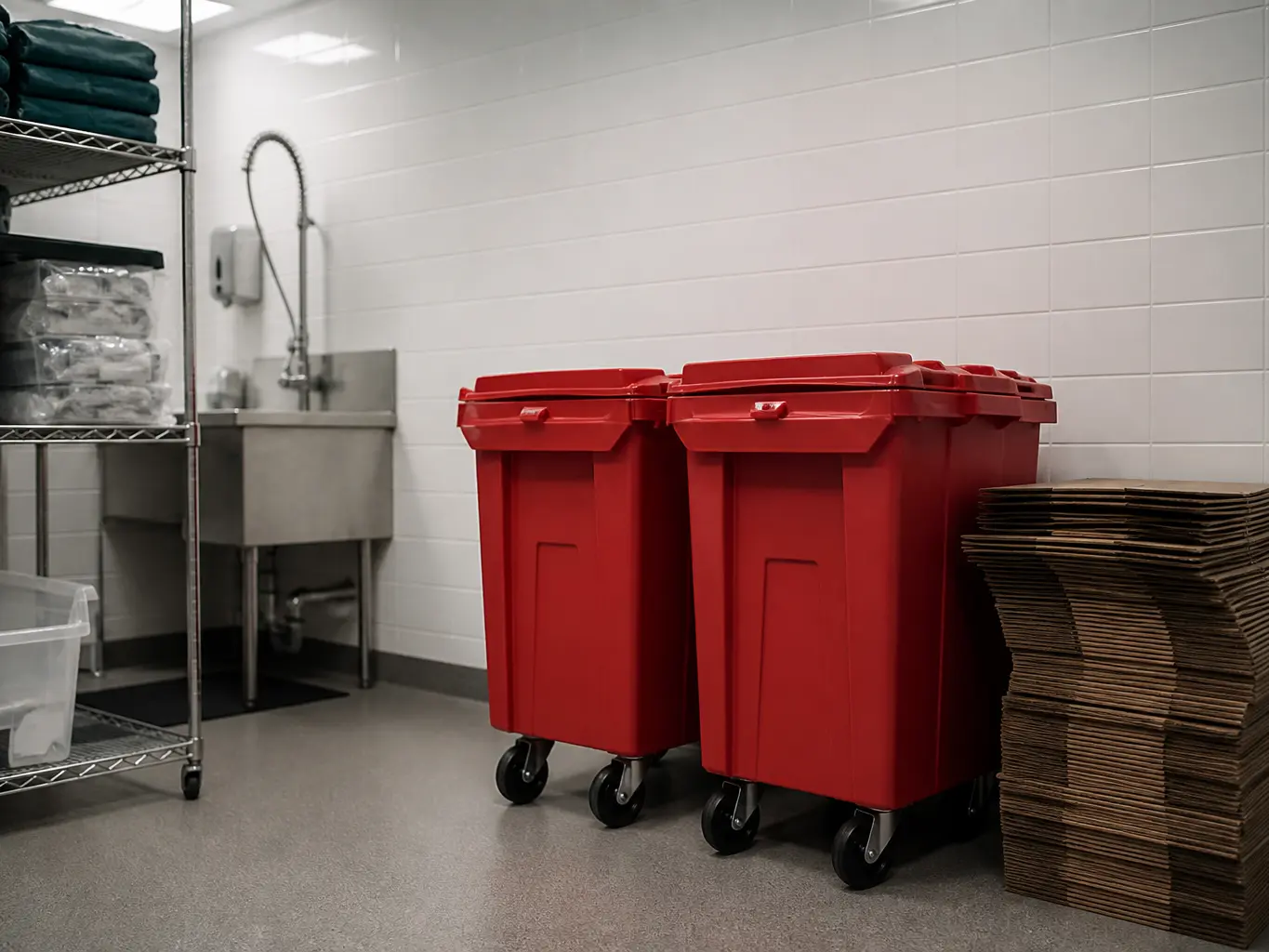
Container placement
The container fits the room. For your space and pickup volume.
We put it where your staff actually work, so nobody carries waste across the building.
What it is
Keep regulated waste in the right container.
Regulated medical waste is anything contaminated with blood or other potentially infectious material. We supply the containers, collect them on a set schedule and take the waste off your hands so your team can get back to patients.
Containers
Container size follows your volume.
We size standard regulated-medical-waste containers around your volume between pickups and the space available in your facility.
Your team gets the right capacity in a practical location for everyday use.
- Sized to your volume between pickups
- Placed where your staff actually work, so nobody carries waste across the building
- Sharps go in a sharps container, never in a red bag (see Sharps Disposal)
Schedule
Choose a schedule that fits your facility.
Most facilities settle into a rhythm once they see a month of real volume, and we would rather adjust the schedule than watch you overpay for pickups you do not need.
Pickup frequency depends on the facility requirements and volume, ranging from several pickups per week to weekly service. We set the schedule around what the client needs.
- A set schedule you can plan staffing around
- Adjust up or down as your volume changes
- Tell us if something changes and we will work it out. No ticket queue
Paperwork
Know which records support your program.
That is the whole point of the paperwork.
The customer receives the legal documentation necessary for their service records, including the documentation associated with collection and destruction.
We help you choose the right container.
Tell us what you generate in a normal week and we will tell you what it goes in. It is a two-minute conversation, not a form with twelve fields.
Regulated waste containers and bags stay their standard red. We do not recolour compliant containers to match our brand.
Handling & compliance details
The definition is easy. The item in your hand is not.
Three categories decide where an item goes, and most day-to-day confusion is between the first two.
Regulated medical waste
- Regulated medical waste is waste contaminated with blood or other potentially infectious material, and it cannot go out with the facility's ordinary trash.
- Also called: Red-bag waste, Biohazardous waste, Infectious waste, RMW
- Counts as Regulated medical waste
- Liquid or semi-liquid blood or other potentially infectious material
- Items that would release blood or other potentially infectious material if compressed
- Items caked with dried blood or other potentially infectious material that can release it during handling
- Contaminated sharps, which go in a sharps container rather than a bag
- Not Regulated medical waste
- Exam paper, packaging and wrappers, which are ordinary trash
- Uncontaminated gloves and gowns, which are ordinary trash
- Expired or unused medication, which goes in a pharmaceutical waste container
- 29 CFR 1910.1030(b)
Ordinary clinic trash
- Ordinary clinic trash is waste that is not contaminated with blood or other potentially infectious material and is not a hazardous or pharmaceutical waste, and it leaves with the facility's regular waste.
- Counts as Ordinary clinic trash
- Paper, cardboard and sterile-instrument packaging
- Gloves, gowns and wrappers that were never contaminated
- Food and break-room waste from staff areas
- Not Ordinary clinic trash
- Anything saturated with blood or other potentially infectious material
- Any sharp, contaminated or not, which belongs in a sharps container
Hazardous waste
- Hazardous waste is waste that the Resource Conservation and Recovery Act regulates either because it appears on a federal list or because it exhibits a characteristic: ignitability, corrosivity, reactivity or toxicity.
- Also called: RCRA hazardous waste
- Counts as Hazardous waste
- A discarded material on the RCRA P-list or U-list
- A discarded material that is ignitable, corrosive, reactive or toxic by the RCRA characteristic tests
- Not Hazardous waste
- Red-bag waste on its own, which is a separate category with a separate treatment path
- A discarded drug that is neither listed nor characteristic, which is a non-hazardous pharmaceutical waste
- 40 CFR part 261
Medical Waste Tracking Act
- The Medical Waste Tracking Act of 1988 created a federal demonstration program that expired in 1991, which is why medical waste is defined and regulated by the states today rather than by one comprehensive federal EPA rule.
- Also called: MWTA
- Medical Waste Tracking Act of 1988
The container decides the cost. The label decides the compliance.
The expensive mistakes are the boring items: paper, packaging and clean gloves.
| Item | Container | Colour convention | Why | Source |
|---|---|---|---|---|
| Saturated dressings and gauze | Red bag inside a rigid regulated-waste container | Red | Contaminated with blood or other potentially infectious material, so it is regulated waste | 29 CFR 1910.1030(b) |
| Contaminated disposable PPE | Red bag inside a rigid regulated-waste container | Red | Only when it is actually contaminated. Clean gloves and wrappers are ordinary trash | 29 CFR 1910.1030(b) |
| Needles, syringes with needles, lancets, blades | Sharps container | Red | Must be closable, puncture resistant and leakproof on sides and bottom, which a bag is not | 29 CFR 1910.1030(d)(4)(iii)(A) |
| Expired or unused medication | Pharmaceutical waste container | Blue for non-hazardous, black for RCRA hazardous | Which container depends on whether the drug is listed or characteristic under RCRA | 40 CFR part 261 |
| Trace chemotherapy items | Trace chemotherapy container | Yellow | Handled apart from red-bag waste, and apart from bulk chemotherapy drug | Industry convention |
| Paper, packaging, uncontaminated wrappers | Regular waste | None | Not regulated waste. Red-bagging it raises your cost with no compliance benefit | 29 CFR 1910.1030(b) |
Container colours above are industry convention, not federal law. What OSHA requires is the warning label: fluorescent orange or orange-red carrying the biohazard legend, and red bags or red containers may be substituted for that label (29 CFR 1910.1030(g)(1)(i)). Which of these streams Shred Med collects for your site is confirmed before service starts, not assumed from this table.
Who it fits
Small generators have a practical path here.
Any Utah facility that generates red-bag waste needs a regulated medical waste program, from a single-chair practice to a multi-suite clinic. Small generators are most of the market and most of our thinking.
Red-bag volume is driven by what staff put in the bag, not by how many patients you saw. Regulated medical waste costs more per pound to transport and treat than ordinary waste does, so the single biggest lever on the bill is segregation at the point of use. Sharps have their own container, covered on Sharps Disposal. Medication waste has its own path, covered on Pharmaceutical Waste. What is left in the red bag should be the contaminated items and nothing else.
For who regulates which part of this, see Compliance.
- Dental practices
- Medical offices and urgent care
- Veterinary clinics
- Surgery centers
- Laboratories
- Senior living, aesthetics and med spas

Your team touches this once.
Four steps. Your team performs the first one and then stops touching the waste.
Your team seals the container
The container is closed and sealed before the technician arrives, so nothing loose is handled at the door.
A Shred Med technician comes to you
A trained technician, uniformed and identifiable, arrives on your scheduled day and checks the container.
The sealed container leaves sealed
Nothing is opened, decanted or re-sorted on your site. Your staff does not touch the waste again once it is in the container.
A clean replacement goes back in place
The replacement container is in position before the technician leaves, so there is no window where waste has nowhere to go.
The red bag is where careful practices quietly overpay.
Useful whether or not you ever call us.
Red-bagging everything generated in a treatment room
CostRegulated medical waste costs more per pound to transport and treat than ordinary waste, and red-bag volume is set by what staff put in the bag rather than by patient volume, so an over-inclusive bag is a permanent line on the invoice.
Do this insteadSegregate at the point of use, and put only items contaminated with blood or other potentially infectious material in the red bag.
Dropping sharps into a red bag
OSHAOSHA requires contaminated sharps to be discarded into a container that is closable, puncture resistant and leakproof on the sides and bottom, and a bag is none of those things.
Do this insteadPut every sharp into a sharps container at the point of use, never into a bag.
29 CFR 1910.1030(d)(4)(iii)(A)Filling the container past the point where the lid closes
OSHAOSHA requires regulated-waste containers to be closable and to be closed before they are removed from the area of use, and a container that will not close cannot be moved compliantly.
Do this insteadClose the container at its fill line rather than when it stops accepting more.
29 CFR 1910.1030(d)(4)(iii)Treating a label with patient information as a waste question
HIPAA governs protected health information, not waste as a category, so a pill bottle label or a specimen bag carrying patient information raises a privacy question that the waste decision does not answer.
Do this insteadHandle packaging and labels carrying protected health information as PHI, separately from the decision about which waste container the item goes in.
HIPAA Privacy Rule, 45 CFR part 164
FAQ
Frequently Asked Questions
4 answers
Regulated medical waste is waste that is contaminated with blood or other potentially infectious material, and it cannot go in your regular trash.
You will hear it called red-bag waste, biohazardous waste or RMW — they refer to the same category. It has to be segregated at the point of use, stored in the right container and collected by a provider set up to transport and treat it.
Ready for a cleaner, easier solution?
Tell us what you generate and we will put a straightforward number in front of you.